

Disability empowerment isn’t just a buzzword; it’s a movement that’s reshaping how society views ability and potential. Imagine a world where everyone, regardless of their challenges, can strut their stuff with confidence and flair. That’s the dream, and it’s closer than ever!
Understanding Disability Empowerment
Disability empowerment represents a vital movement focused on reshaping how society views individuals with disabilities. This approach emphasizes not just the capabilities of these individuals, but also their right to participate fully in all aspects of life.
Definition and Importance
Disability empowerment refers to the process allowing individuals with disabilities to take charge of their lives. It encourages them to achieve agency through self-advocacy and participation in decision-making processes. This empowerment fosters confidence, independence, and self-worth. As communities recognize the significance of inclusion, the push for equitable access to resources and opportunities grows stronger. Empowerment ultimately leads to the dismantling of stigma, enabling a more inclusive environment for everyone.
Historical Context
Historical perspectives on disability reveal a shift from charity-based approaches to advocacy and rights-based movements. Early societies often viewed disability through a lens of pity or fear, leading to segregation. In the latter half of the 20th century, advocates like Ed Roberts sparked the independent living movement, challenging societal norms. This change laid the groundwork for significant legislation, such as the Americans with Disabilities Act of 1990. By highlighting the rights and capacities of individuals with disabilities, history underscores the ongoing struggle for dignity and equality.
Key Principles of Disability Empowerment
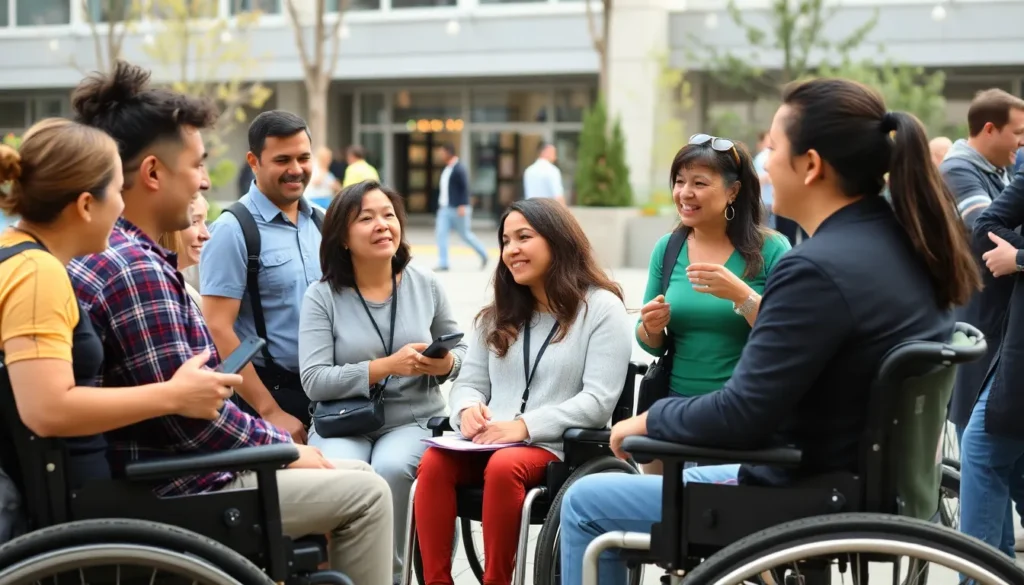
Disability empowerment encompasses several key principles that guide its movement and impact. These principles focus on promoting the rights, opportunities, and voices of individuals with disabilities.
Advocacy and Representation
Advocacy plays a crucial role in disability empowerment. Individuals with disabilities gain a platform to express their needs and desires. Support from allies enhances visibility and influences policy changes. Representation in media and leadership positions fosters a more accurate portrayal of disability. Organizations dedicated to advocacy amplify the voices of those affected, ensuring their concerns are heard and addressed.
Accessibility and Inclusion
Accessibility is paramount in creating an inclusive environment. Physical spaces must accommodate the diverse needs of individuals with disabilities. Services should adapt to ensure everyone has equal access to opportunities. Embracing technology can bridge gaps and facilitate communication. Inclusion extends beyond architecture, emphasizing participation in education, employment, and community life.
Strategies for Promoting Disability Empowerment
Promoting disability empowerment involves various effective strategies that encourage participation and change. Engaging communities and advocating for inclusive policies play significant roles in this process.
Community Engagement
Active participation in local communities fosters awareness and support for individuals with disabilities. Organizations can host workshops and events to promote dialogue about disability rights. Collaboration between stakeholders, including local businesses and advocacy groups, contributes to creating inclusive environments. Additionally, volunteer opportunities should be accessible, allowing individuals with disabilities to engage in meaningful activities that build confidence. Celebrating disability culture through festivals or social events highlights the strengths and talents within the community.
Policy and Legislation
Advocating for robust policies and inclusive legislation serves as a cornerstone for disability empowerment. Passing laws like the Americans with Disabilities Act ensures equal access to public spaces and services. Grassroots movements push for legislative reforms that enhance accessibility and funding for resources aimed at people with disabilities. Stakeholders must advocate for policy changes that address systemic barriers, focusing on education, employment, and healthcare. Collaborating with policymakers helps build momentum for initiatives that protect and promote the rights of individuals with disabilities.
Case Studies of Successful Disability Empowerment
This section examines impactful examples of disability empowerment through local initiatives and global perspectives.
Local Initiatives
Community-driven programs foster empowerment at the local level. For instance, a nonprofit organization in New York City launched an initiative providing job training and resources specifically for people with disabilities. Through workshops and mentorship, participants gain essential skills that enhance their employability. Another successful example comes from a community center in Los Angeles, which creates inclusive recreational programs. These programs not only promote physical activity but also encourage social interaction among individuals with diverse abilities. Such initiatives illustrate how localized efforts can significantly enhance the quality of life for individuals with disabilities.
Global Perspectives
International examples showcase broader movements for disability empowerment. In Sweden, inclusive education policies ensure that students with disabilities receive tailored educational support, leading to higher graduation rates. Programs in countries like Australia emphasize the participation of individuals with disabilities in decision-making processes, thereby shaping policies that affect their lives. Additionally, organizations worldwide advocate for accessibility in urban planning, ensuring public spaces accommodate all individuals. These global efforts highlight the importance of inclusion, demonstrating how widespread advocacy can lead to significant societal changes.
Challenges in Disability Empowerment
Challenges persist in the journey toward disability empowerment. They stem from both societal attitudes and systemic structures that hinder progress.
Societal Barriers
Societal barriers often manifest as stigma and misconceptions about disabilities. Individuals with disabilities face prejudice, leading to exclusion from social and professional spheres. Misunderstandings about their capabilities create negative stereotypes that impede acceptance. Some media portrayals reinforce these stereotypes, failing to reflect the diversity of experiences among individuals with disabilities. Activism plays a critical role in challenging these barriers. Communities become more aware when individuals speak out, fostering change in perceptions. Stereotypes need to be dismantled through education and advocacy to create inclusive environments that support all individuals.
Systemic Issues
Systemic issues significantly affect the empowerment of individuals with disabilities. Accessibility remains a crucial problem in many areas. Public spaces, transportation systems, and educational institutions frequently lack adequate accommodations, limiting participation. Employment opportunities often reflect biases against hiring individuals with disabilities, perpetuating unemployment. Policies might not prioritize the needs of those with disabilities, leaving gaps in support services. Advocacy for comprehensive legislation can address these issues. Stronger policies are necessary to ensure equal access to resources and protect the rights of individuals with disabilities. Collaborations with stakeholders can lead to systemic change that fosters equality and inclusion.
Disability empowerment is more than just a movement; it’s a vital shift in how society perceives and engages with individuals with disabilities. By fostering self-advocacy and promoting inclusion, it paves the way for a more equitable world. Local initiatives and global efforts exemplify the power of community and collaboration in driving meaningful change.
Despite ongoing challenges, the push for accessibility and representation remains strong. Continued advocacy is essential for dismantling barriers and reshaping societal attitudes. As individuals with disabilities assert their rights and capabilities, they inspire others to join the journey toward a more inclusive future. Empowerment is not just a goal; it’s a transformative process that benefits everyone.