
Communication can be a tricky business, especially when it comes to autism. Imagine trying to decipher a secret code while juggling flaming torches—sounds chaotic, right? For many on the autism spectrum, traditional communication methods can feel just as daunting. But don’t worry; there’s a world of innovative strategies that can turn this challenge into a fun and rewarding journey.
Understanding Autism Communication
Communication for individuals on the autism spectrum involves unique challenges and complexities. Emphasizing understanding and adaptability often leads to effective interactions.
What Is Autism Communication?
Autism communication encompasses the various ways individuals with autism express thoughts and feelings. Many utilize non-verbal cues like gestures and facial expressions. Others may prefer alternative methods, such as assistive technology. Communication varies widely among autistic individuals, making it essential to recognize personal preferences. Understanding these diverse forms contributes to more meaningful exchanges.
Importance of Effective Communication
Effective communication significantly impacts social interaction and emotional well-being for people with autism. Clear and accessible communication fosters relationships and promotes inclusion. It enhances self-expression, empowering individuals to share their experiences. Establishing effective communication reduces frustration, which often arises from misunderstandings. Ultimately, promoting effective communication increases overall quality of life for those on the autism spectrum.
Communication Challenges in Autism
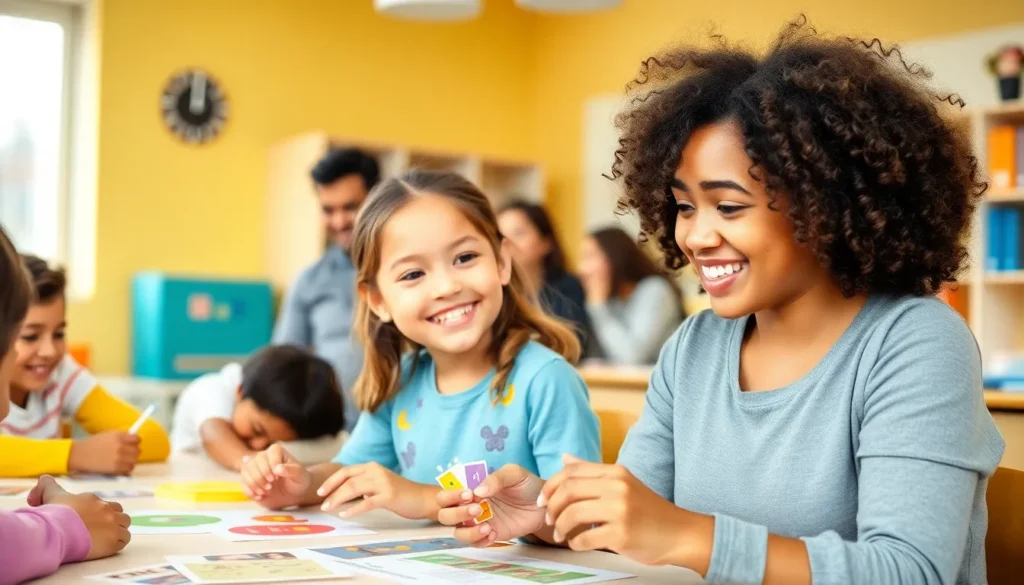
Communication challenges significantly affect individuals on the autism spectrum. These challenges can impede social interaction and emotional expression, leading to frustration and misunderstandings.
Common Barriers to Communication
Barriers often manifest in various forms. Difficulty with verbal expression impacts clarity. Some individuals struggle to understand idiomatic language, resulting in confusion. Non-verbal communication poses another challenge, with gestures and facial expressions varying among individuals. Sensory sensitivities may hinder the ability to process auditory or visual information, complicating interactions even further. Assistive technology, although helpful, requires consistent use and understanding. Each barrier uniquely influences an individual’s ability to communicate effectively.
Impact on Social Interactions
Social interactions may suffer due to these communication challenges. Misinterpretations can lead to awkward exchanges and social withdrawal. Relationships often experience strain when communication is inconsistent. Individuals may feel isolated, reducing opportunities for meaningful engagement. Over time, repeated challenges can diminish self-esteem. Supportive environments, however, foster growth in communication skills. Encouraging understanding and patience improves social dynamics, leading to more fulfilling connections.
Strategies for Enhancing Autism Communication
Enhancing communication for individuals on the autism spectrum requires a variety of strategies tailored to their unique needs. Implementing these techniques can significantly improve social interactions and emotional well-being.
Visual Supports and Tools
Visual supports play a key role in enhancing communication. They include items like picture schedules, charts, and social stories. These tools help convey information clearly and effectively. By presenting concepts visually, individuals can bypass language barriers and better understand their environment. Many find comfort and clarity in using visual aids, as they simplify complex ideas. Utilizing color coding and symbols promotes organization, making communication more intuitive. Thus, employing visual supports can create pathways for more successful interactions.
Using Technology for Communication
Technology offers innovative solutions for improving communication. Various apps and devices facilitate speech generation and expression. For instance, augmentative and alternative communication (AAC) devices allow individuals to communicate through text or symbols. Many prefer these electronic options because they personalize interactions. Additionally, mobile applications designed for communication can be tailored to individual preferences and needs. Engaging with technology can enhance both verbal and non-verbal communication skills. Consequently, integrating technological tools fosters greater independence and social connection.
Role of Caregivers and Educators
Caregivers and educators play a pivotal role in enhancing communication for individuals on the autism spectrum. They provide the necessary support and resources to foster effective interactions.
Supporting Communication Development
Caregivers and educators must create a structured environment that promotes communication. Engaging in regular, meaningful conversations allows individuals to practice their skills. Utilizing visual aids, like charts and symbols, reinforces understanding. Frequent modeling of language and social skills helps individuals learn appropriate responses. Tailoring activities to each individual’s interests increases motivation and engagement. Collaborating with speech-language therapists can provide additional strategies to support development effectively.
Encouraging Natural Communication Opportunities
Natural communication opportunities arise during daily routines. Caregivers and educators can enhance interactions during playtime, mealtime, and classroom activities. Asking open-ended questions encourages spontaneous responses. Providing wait time allows individuals to process information and respond at their own pace. Including peers in interactions fosters social engagement and builds relationships. Practicing communication in real-world contexts aids retention and encourages confidence. Prioritizing these natural moments creates a richer learning environment that supports overall communication growth.
Navigating communication on the autism spectrum presents unique challenges that require understanding and patience. By embracing innovative strategies and tools, individuals can find their voice and connect with others more effectively.
Supportive environments foster growth and encourage meaningful interactions, enhancing social connections and emotional well-being. Caregivers and educators play a vital role in this journey, providing the necessary resources and encouragement to help individuals thrive.
Ultimately, prioritizing effective communication not only enriches the lives of those on the autism spectrum but also strengthens relationships and promotes inclusion within the community.